Ceramic coating arrived in the marine world with the same breathless marketing it had in the car world, which makes it hard to get a straight answer to the only question that matters: is it worth it on your boat?
Having coated a lot of hulls — and talked plenty of owners out of it — here’s how we actually think about it.
What a marine ceramic coating does
A professional ceramic system bonds a hard, glass-like layer to your gelcoat or paint. On the water, that buys you three real things:
- UV resistance. The coating takes the sun’s abuse instead of your gelcoat, dramatically slowing the chalking that dulls hulls.
- Release. Salt crust, waterline scum, exhaust staining, and guano release with a rinse instead of a scrub. Owners consistently report wash effort cut in half.
- Gloss retention. A coated hull holds its depth of shine for seasons, not months.
What it does not do: prevent scratches, replace bottom paint, or make a neglected hull look restored. Coating locks in whatever finish exists the day it’s applied — which is why correction comes first, always.
When it clearly pays
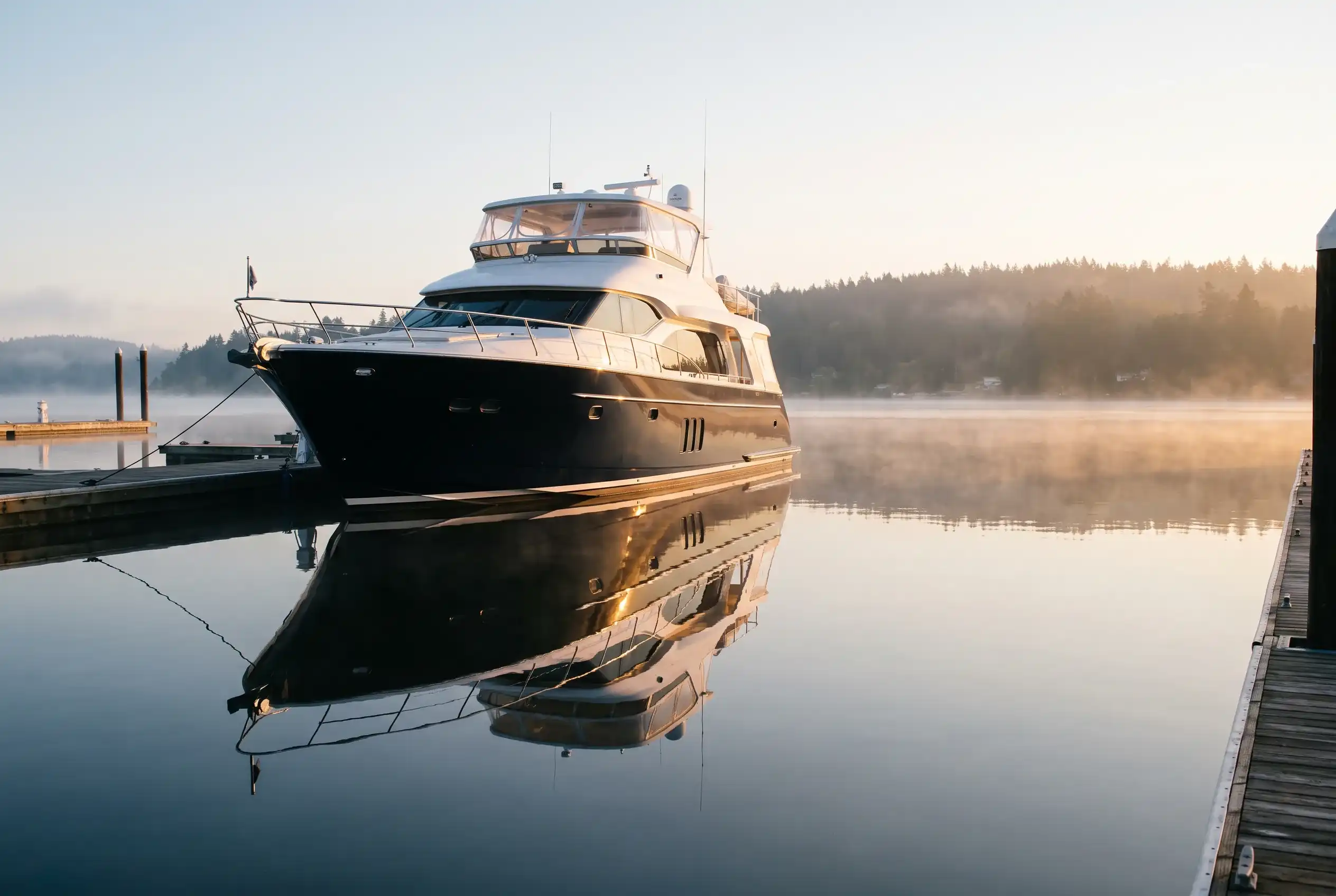
Boats that live in the water. Moored vessels fight waterline staining and biological growth all season. This is where ceramic earns its keep most obviously — the waterline wipes clean instead of demanding acid washes that eat gelcoat.
Dark hulls. Navy, black, and deep green hulls show oxidation first and suffer UV worst. Coating a freshly corrected dark hull is the difference between “stunning for years” and “chalky by August.”
Owners who pay for wash service. If a crew washes your boat weekly, the coating cuts labor per visit. Over a multi-year coating life, the arithmetic often goes positive on labor savings alone.
When wax is the smarter buy
Trailered boats under 25 feet. Out of the water, rinsed after use, garage-kept? A quality polymer sealant twice a season keeps that boat beautiful for a fraction of the cost.
Hulls due for paint. Coating gelcoat that’s within a couple seasons of an Awlgrip job is money thrown overboard. Spend it on the paint.
“Flip” boats. Selling in a year? A correction and wax presents just as well at survey.
The honest numbers
For a professional system on Puget Sound, expect roughly $95–$150 per foot including the correction work, depending on condition and vessel type, with a serviceable life of two to four seasons in-water. Against an annual compound-and-wax at $55–$70 per foot, coating typically breaks even around season two — if the boat stays in the water and if the prep was done right.
That second if is the whole game. A coating is only as good as the correction underneath it and the installer’s certification behind it. Ask to see both before anyone touches your hull — we’ll show you ours.