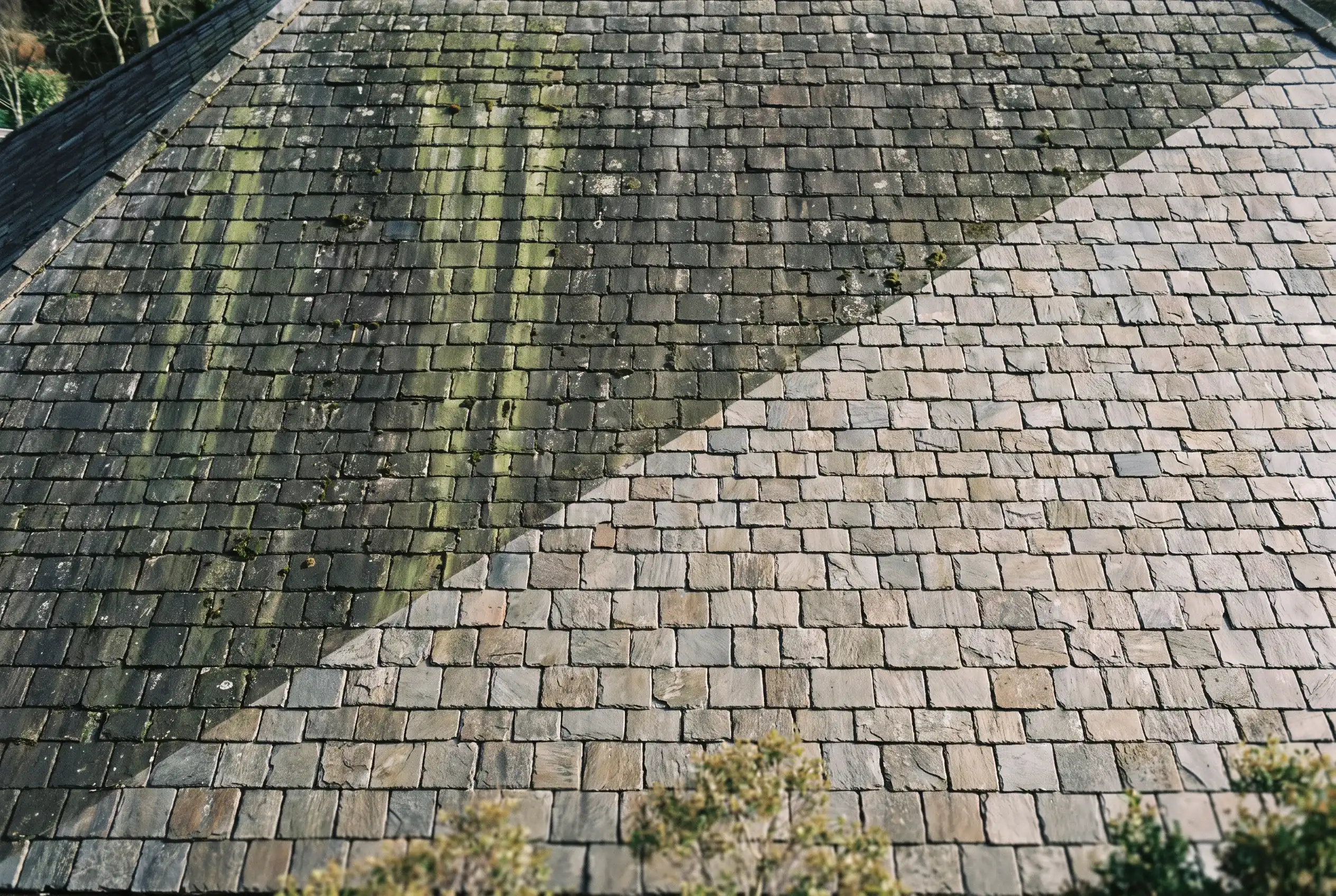
In most of the country, roof moss is a cosmetic complaint. Around Puget Sound, it’s a structural one. Nine months of moisture and shaded lots under evergreens make this one of the best moss habitats on earth — and your roof is the sunniest real estate the moss can find.
Why moss actually damages roofs
Moss doesn’t just sit on shingles; it works under them. Its rhizoids wick moisture beneath the shingle edge and hold it there, keeping the substrate wet for weeks after rain. Three things follow:
- Lifted edges. Moss pads physically pry shingle edges upward, opening paths for wind-driven rain.
- Freeze cycles. Water held under shingles freezes on cold nights and levers them further apart.
- Granule loss. The perpetually damp band under a moss colony sheds its protective granules years early.
Roofing contractors around the Sound will tell you the same thing: they replace moss-managed roofs at 25–30 years and neglected ones at 15–18.
The window that matters
Moss treatment works best in fall and spring, when colonies are actively growing and drawing in moisture — along with whatever solution is applied to them. A summer-dormant, bone-dry moss pad is far more stubborn. If you’re reading this in October with green velvet on the north slope, this is precisely the moment to act.
What safe removal looks like
The industry-standard method — the one shingle manufacturers actually specify — is a low-pressure soft wash: an applied solution that kills the colony at the root, followed by gentle removal of the dead material, either the same day or over the following weeks as weather works loose the residue.
What it never looks like:
- Pressure washing. Strips granules and drives water under shingles. A roof pressure-washed twice is a roof replaced early.
- Aggressive scraping. Takes granules and shingle edges with it.
- Untreated “moss killer” granules along the ridge. Zinc strips and powders lighten the moss directly below them and leave stripes; they’re maintenance at best, not remediation.
The honest cost math
A professional roof soft wash on an average Northwest home runs several hundred to a little over a thousand dollars, and lasts four to six years with a treatment warranty. A roof replacement runs $15,000–$40,000. Deferring a $900 treatment to buy a roof five years early is the most expensive money a homeowner never spent.
If you’re unsure what stage your roof is at, ask for an inspection with photos — a reputable company will show you the condition up close and tell you plainly if treatment can wait a season. (Ours will.)