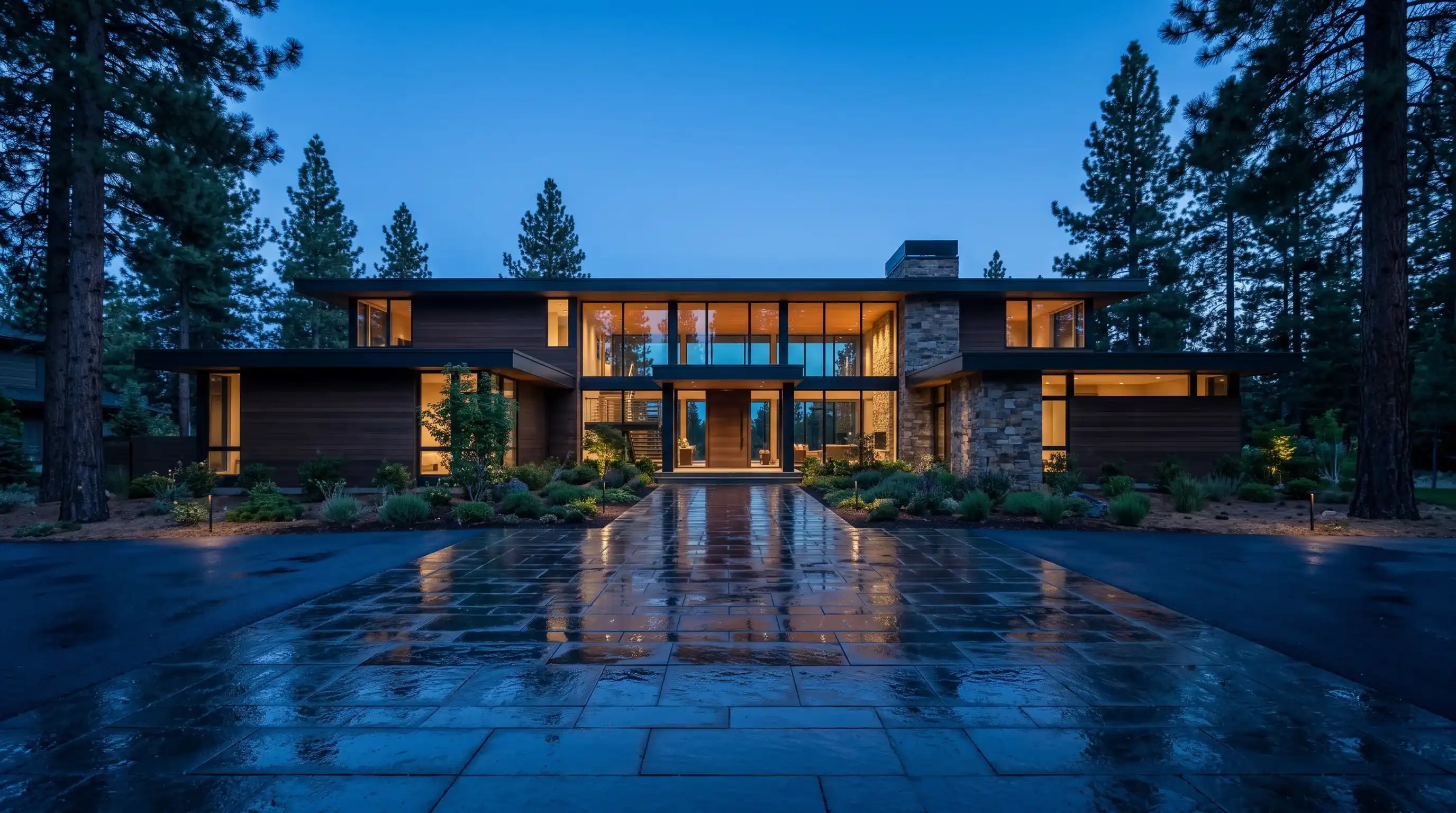
Walk any waterfront neighborhood in the Sound and you can spot the houses that were pressure washed by an enthusiastic amateur: fuzzy streaks across the cedar, chalky stripes on the render, a roof shedding granules into the gutters. The tool wasn’t wrong — it was just pointed at the wrong surface.
Here’s the distinction that professionals use, and that every homeowner should know before hiring anyone with a wand.
The one-sentence rule
If the surface is hard mineral underfoot — concrete, pavers, natural stone — pressure wash it. If it’s anything else — siding, roofs, fences, screens, painted or sealed wood — soft wash it.
What soft washing actually is
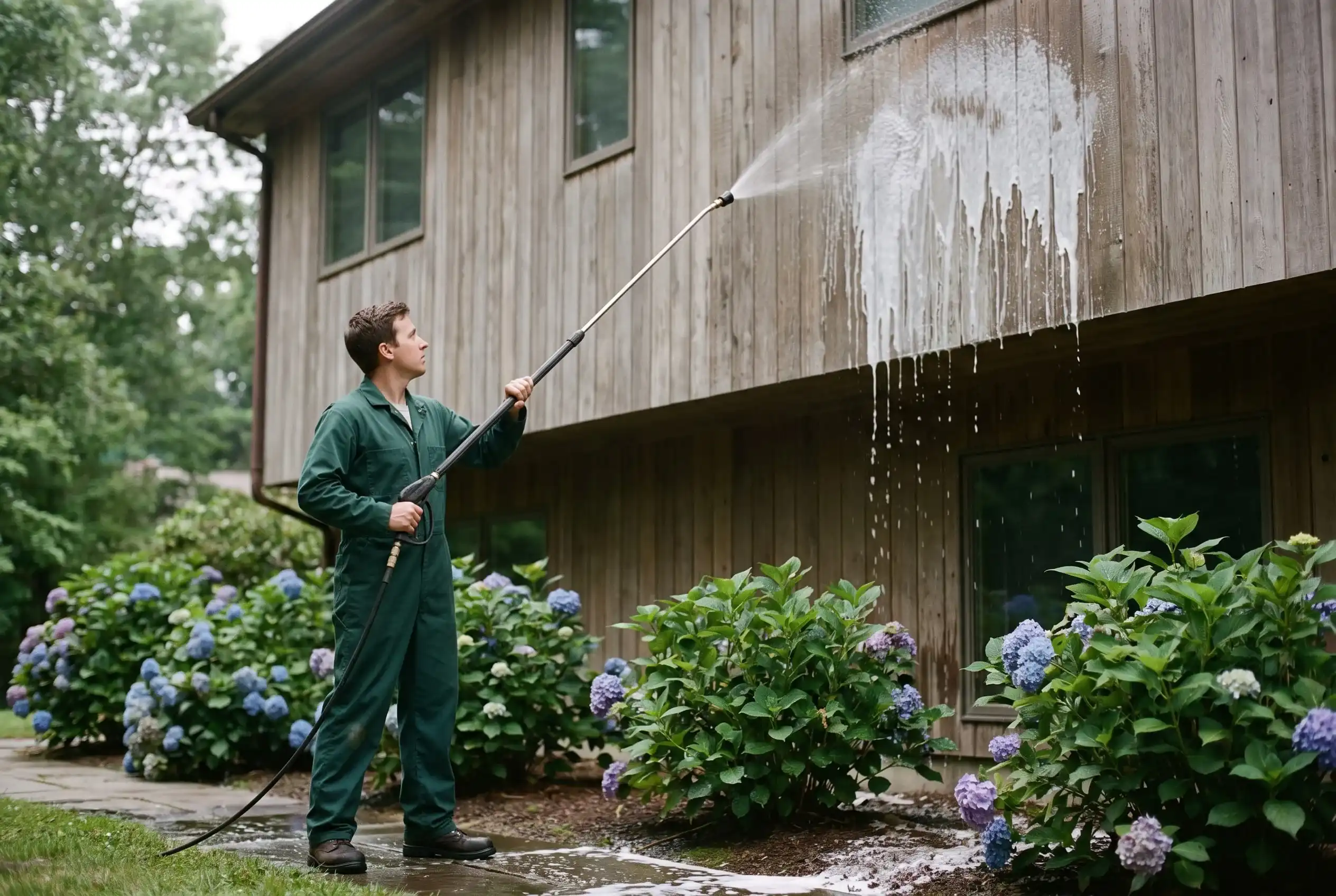
Soft washing applies a biodegradable cleaning solution at little more than garden-hose pressure — typically under 100 PSI, versus the 2,500–4,000 PSI of a pressure washer. The chemistry does the work: it dissolves the algae, mold, mildew, moss, and lichen that make surfaces green and black, then everything rinses away gently.
The crucial difference is what happens at the root. Pressure shears growth off at the surface, leaving the organism’s holdfast alive in the substrate. Chemistry kills it entirely. That’s why a soft-washed roof stays clean four to six years while a pressure-washed one greens up again in twelve to eighteen months.
What pressure washing is for
Concrete, brick, and stone can take real pressure — and often need it. Embedded grime, tire marks, and years of oxidized dirt don’t respond to gentle chemistry alone. The professional difference is equipment and technique: surface cleaners that spread pressure evenly (no zebra stripes), PSI matched to the material, and pre-treatment for oil, rust, and tannin stains.
Where homeowners get burned
- Roofs. Walking a roof with a pressure wand strips granules from composite shingles and cracks tiles. Every major shingle manufacturer specifies low-pressure chemical cleaning; high pressure can void the warranty outright.
- Cedar and softwoods. Pressure “fuzzes” the grain permanently. Once the fibers lift, only sanding fixes it.
- Painted siding. Pressure finds every weak spot in the paint film and peels it — often injecting water behind the cladding on the way.
- Window seals. Direct high pressure blows out glazing seals, and fogged double-panes follow a season later.
What a professional visit looks like
Most complete exterior projects use both methods in sequence: soft wash for the house envelope and roof, pressure washing for the drives, walks, and patios. That’s why we quote them together — and why the crew that arrives carries both systems on one rig.
The honest answer to “which do I need?” is usually “both, in the right places.” What matters is that whoever you hire knows the difference — and can explain, before they start, exactly which method every surface on your property is going to get.